Most wedding days need between 6 and 9 hours of photography coverage. A simple day at a single venue can be covered well in about 6 hours. A complex day with multiple locations and real drive time between them runs closer to 9. The right number for a specific wedding isn't picked off a package tier; it's derived from the structure of the day: the ceremony time, whether there's a first look, how many locations the day touches and how far apart they are, and whether the couple wants both the getting-ready hours and the reception covered or only one of them. Work backwards from the ceremony to find when coverage has to start, build forward through the reception to find where it can end. The number of hours your day needs is the gap between those two times.
After ten years and a couple hundred weddings, here's where I've landed: the hours are a result of the structure of the day. The day has a shape - a ceremony that can't move, locations that sit a real distance apart, a morning and a night the couple cares about unevenly - and once you know this, the coverage number comes from the math. I walk through the full method in the complete guide to building a wedding day timeline; this post is about turning that method into the number of hours that you can walk through with the couple on a consultation.
Why is 8 hours the industry default?
Eight hours is the middle tier on most pricing guides, which is how it became the industry's default answer, but it says nothing about whether a wedding day fits inside it.
Package tiers exist because pricing guides need structure. When we put 6, 8, and 10 on a sheet, we're rounding every day we've ever shot into numbers that are easy to sell. But when a couple picks 8 because it's in the middle, nobody runs the math on their actual day, and the mismatch comes out on the wedding day, when the only options left are cutting something or staying late.
An 8-hour package on an 8.5-hour day could mean leaving before the dance floor opens, or starting after the dress is already on. The fix is deriving the number the day actually needs and then recommending the package that holds it. This has two halves: when coverage has to start, and when it can honestly end.
How do you calculate when photography coverage should start?
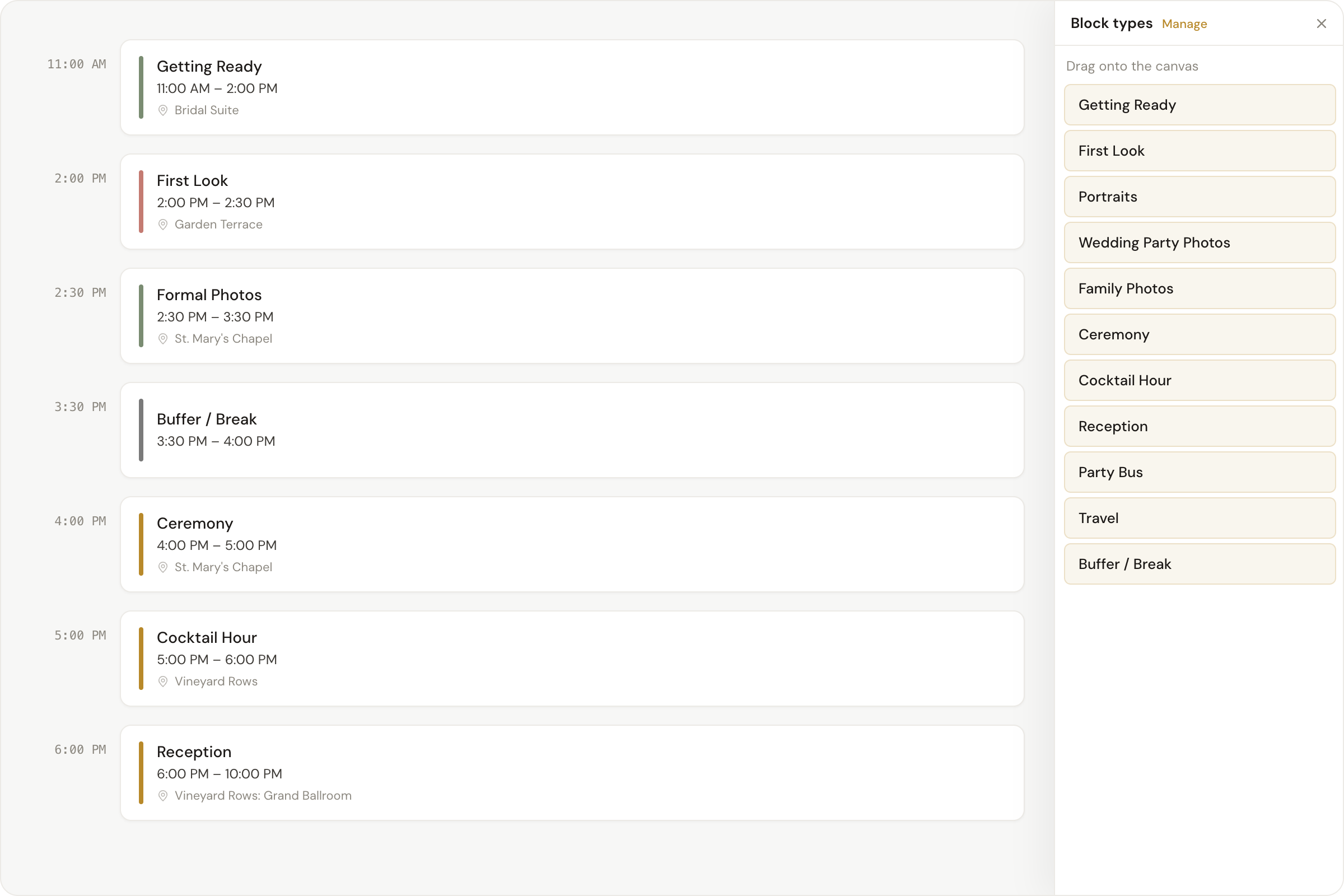
To find when photography coverage starts, work backwards from the ceremony. Start at the ceremony time and subtract, in order: a 30-minute buffer (every photo before the ceremony should be wrapped at least 30 minutes before it starts), about 60 minutes of wedding party and family formals, about 30 minutes for the first look and couples portraits (if they're doing one), the real travel time from getting ready to the ceremony plus at least 10 minutes for loading and parking, and about 2 hours of getting-ready coverage. On a typical first-look day with one 20-minute drive, that adds up to roughly four and a half hours before the ceremony, so a 4:00 PM ceremony forces a coverage start around 11:30 AM. Notice how I didn't pick 11:30 out of the blue, it came from the ceremony time.
This is the same Build Backwards method from the complete guide to building a wedding day timeline. The useful thing about it at inquiry is that it runs fine on rough inputs. The couple doesn't know their hair and makeup schedule a year out, and they don't need to. Ceremony around 4, first look, one venue? You can run those numbers in your head and know the front half of the day is about four and a half hours before they've decided a single detail.
This method flexes with the day. No first look, and the couples portraits and most formals move to after the ceremony, so the front of the day shrinks and the back grows. A church that wants photos wrapped a full hour before the ceremony pushes everything back 30 more minutes. A big wedding party or a single makeup artist stretches getting ready past 2 hours. None of that breaks the timeline, you're just moving different blocks. (The per-block durations behind all of this live in the wedding day timing guide.)
How do you calculate when photography coverage should end?
Photography coverage can typically end about 30 minutes into open dancing. Build forward from the ceremony to get there: the ceremony itself (15 to 30 minutes for a short secular one, 60 to 70 for a full religious one), a 60-minute cocktail hour, the grand entrance (about 5 minutes), dinner, toasts (about 10 minutes), the first dance (about 3), parent dances (about 5), and the cake cut (about 5). After that, a set of open dancing, roughly 30 minutes, is enough to capture the dance floor at its best, because the photos from the second hour of dancing look like the photos from the first. If the couple has a planned exit, coverage runs to the exit instead, which usually adds hours, since the exit sits at the very end of the night. That end point, minus the derived start, is the day's honest hour count.
The reception has a clear line between the moments that need full coverage and the stretch that doesn't. Entrance, toasts, first dance, parent dances, cake: those happen once, on a schedule, and you have to be there for every one. Open dancing is different. It's wonderful and it's repetitive. Thirty minutes in, you have the packed floor, the parents pulled out of their chairs, the couple in the middle of it. Hour two produces the same frames with sweatier guests.
That's also why the special exit matters during the consultation. Formal send-offs have gotten less common in my experience, and I think coverage cost is part of why: the exit itself takes five minutes, but it extends your coverage window for the whole night in between. If a couple wants one, the exit sets the end time, not the dance floor. Say that during the consultation, not at 9:40 PM on the day.
Why does venue distance change the hours more than almost anything?
Multiple locations with long drive times is the single biggest driver of total coverage hours. Every leg of travel adds its real drive time plus at least 10 minutes for loading people into cars, driving as a group, and parking, and none of that time produces photos. One 20-minute move barely registers. But a day with getting ready in one town, a ceremony 45 minutes away, and a reception another 45 minutes from that carries about an hour and a half of just driving, and that alone can make a 6-hour package impossible. The same events that fit comfortably into 6 hours at a single venue can need 8 or 9 once they're spread across multiple locations. When you're planning a day, count the locations and map the real distances between them before you say a number, because travel time is extremely easy to forget.
I learned to ask about this the hard way, shooting weddings in western Nebraska. Out there it's completely normal for the girls to get ready in one town, the ceremony to be in another town 45 minutes away, and the reception to be another 45-minute drive after that. On the consultation, none of that sounds like a photography question, so it doesn't get brought up. But an extra hour and a half of driving inside the coverage window means the day needs a bigger package than the identical wedding at a single venue, and if you don't catch it before you quote, you eat the difference on the wedding day.
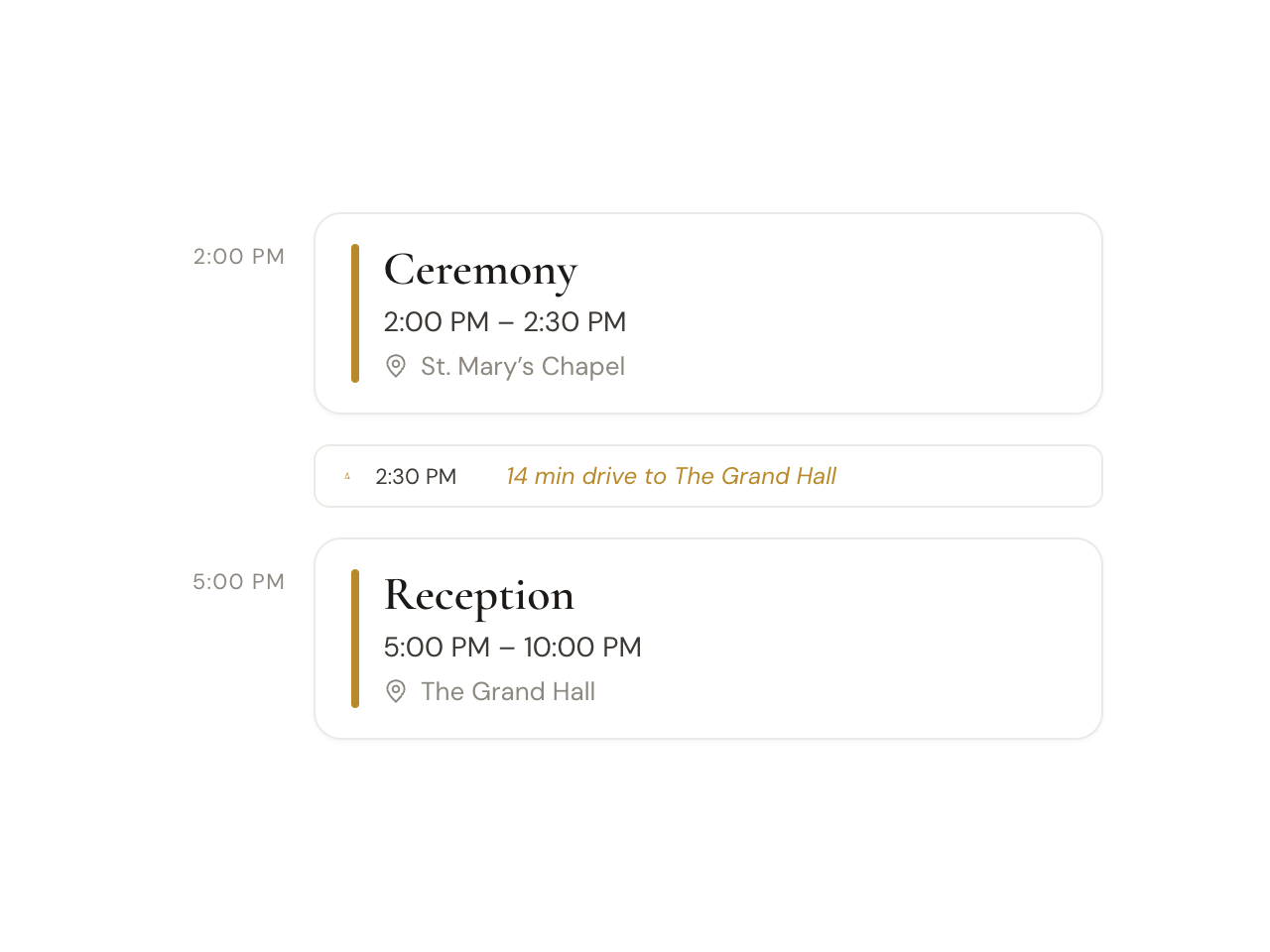
And pure drive time is the optimistic version of travel. The map app assumes one car, no group, no parking lot. A wedding party moves slower than that in every way, and a party bus can take 10 minutes just to unload. The complete guide to building a wedding day timeline goes deeper on padding travel; for planning purposes, real distance between locations is hours, not minutes, and it has to be in the quote.
How much time does a first look add to your coverage?
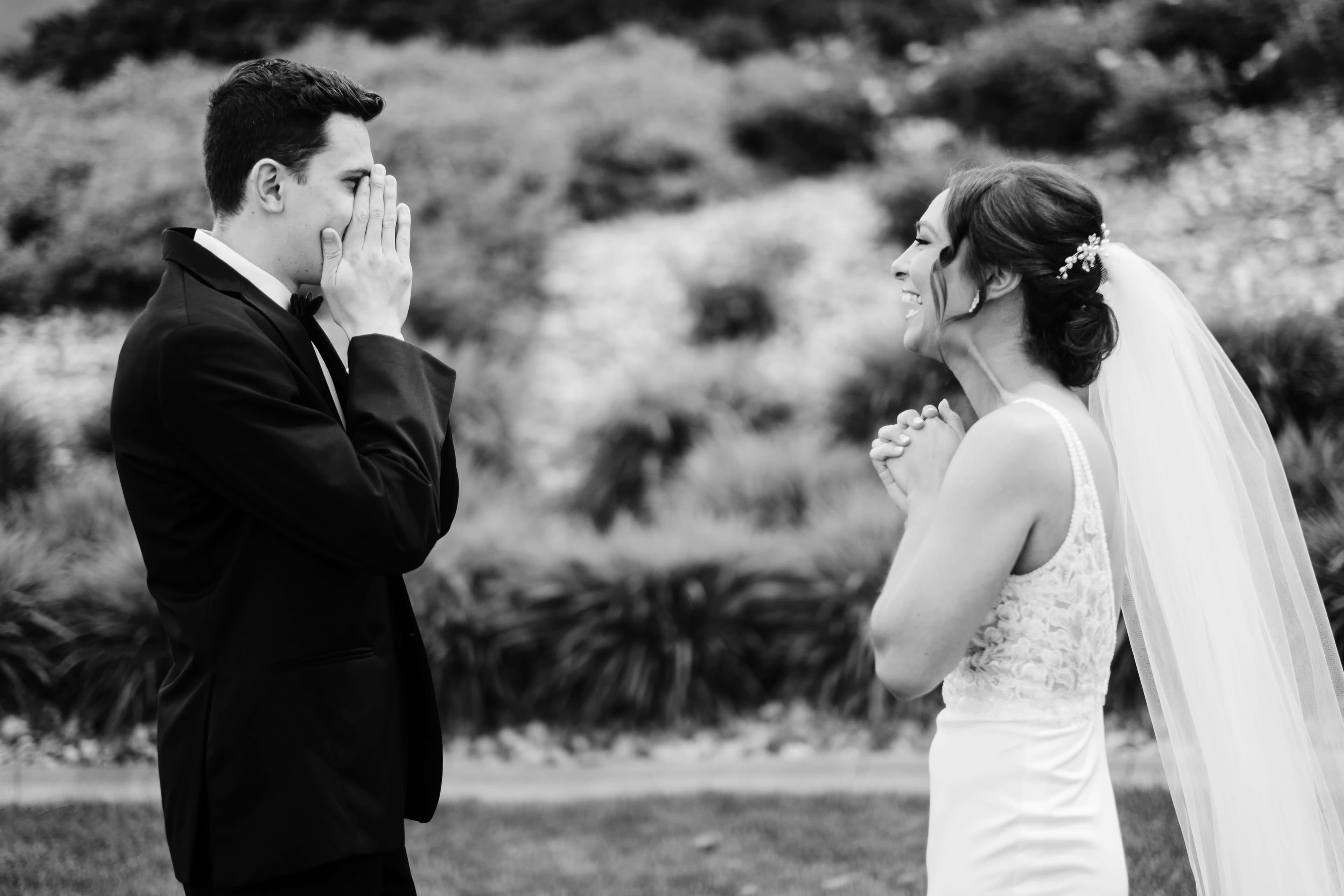
A first look doesn't really add time to the day, it just moves it. The first look itself is about 30 minutes, and it pulls roughly an hour of portraits and formals that would otherwise run after the ceremony to the front of the day, so about 90 minutes of photography moves earlier. Book the same hours and the whole coverage window shifts: it starts about 90 minutes earlier and it ends about 90 minutes earlier into the reception.
A first look on its own doesn't force a bigger package. What forces a bigger package is a first look plus full dance-floor coverage, because now the couple is asking for the early start and the late end. That combination is a bigger day, and the math will show it. Multiple "looks" stretch it further; a first look with dad, then the bridesmaids, then the groom can push the block from 30 minutes toward an hour.
The full decision, including what a no-first-look day does to your formals and why I push hard for first looks on winter dates, is its own post: the first look vs. no first look guide.
What's the minimum coverage for a simple day vs. a complex day?
A simple wedding day, with the ceremony and reception at one venue and no long moves, can be covered well in about 6 hours. A complex day, with separate getting-ready, ceremony, and reception locations and drive time between them, typically needs about 9. Three things move a day between those numbers: how many locations the day touches and how far apart they sit, whether there's a first look shifting about 90 minutes of photography to the front of the day, and whether the couple wants both getting-ready coverage and dance-floor coverage or is willing to give one up. A 6-hour day almost always means trading away one end of the day, most often the getting-ready hours. A 9-hour day means the whole day fits: the dress going on, the ceremony, and a packed dance floor, with the travel in between accounted for.
Six hours is the least coverage I can deliver confidently. Nearly every 6-hour couple I've shot told me some version of "we don't want getting-ready photos." So coverage starts right before the first look, sometimes catching just the very end of getting ready so I can photograph the dress going on, and runs through the first dances and a set of open dancing. The tradeoff is detail time: less room for flat lays and the styled shots of invitations and rings. But the couples who book 6 hours usually don't care about those either, which is exactly why it works.
It flips, too, just more rarely. A couple that cares about the morning and doesn't care about the dance floor can shift the same 6-hour window earlier and end coverage in the middle of the reception.
If they want the dress going on and the packed dance floor, especially with any travel in the day, 6 hours will not capture their day, and I tell them that directly. And the reverse is just as important: when a couple's day genuinely fits in 6, the right recommendation is 6. A couple that books the hours their day actually needs, in either direction, is the whole point of running the numbers.
What should you ask during the consultation before you quote hours?
Before quoting coverage hours, you need answers to four questions. First, what time is the ceremony, even roughly, because everything else is derived from it. Second, is there a first look, because that decides whether about 90 minutes of photography lands before the ceremony or after it. Third, how many locations does the day touch and how far apart are they, because travel is the biggest single driver of total hours. Fourth, and most important, what does the couple care about most: if they want both the getting-ready hours and the dance floor covered, the day needs more hours than if they'd happily give one up. Most couples can't answer any of this precisely a year out, and they don't need to. Rough answers are enough to run the math and land on a good number.
Everything else you'll eventually need for the timeline (the exact addresses, the family groupings, the hair and makeup schedule) matters later and doesn't move the hours much.
The fourth question is the real objective of the consult. If I can understand what this couple actually cares about, I can recommend coverage based on what they want, not what I'd like to sell. When budget is tight, I ask: which would you rather give up, the getting-ready coverage or the reception? Couples can answer that question easily because it's about their day, not my packages. And if they truly can't give up either, they've just talked themselves into the bigger package, with no input from me. Here's how I put the trade to them:
"A half day tends to work best for couples who are having a shorter wedding, or who specifically value either the morning or the reception more than the other. Most of my half-day couples skip getting-ready photos and start coverage around the first look. They didn't care much about getting-ready photos, they really wanted good dance-floor coverage, and their whole day was at one venue, so 6 hours made a ton of sense."
The number you land on at inquiry is temporary, because the couple hasn't made their real decisions yet. Details firm up when the timeline actually gets built, around 3 months out, and the hours sometimes move with them. In my own business I've leaned all the way into that. I don't sell fixed hour counts anymore; I sell a half day (up to 6 hours) and a full day (up to 12, most often landing at 9 or 10), and my contract says the exact hour decision happens when we build the timeline, not at signing. Here's how I frame it during the consult:
"Your wedding is over a year away, and this far out it can be really difficult to know exactly how many hours of coverage you need. Sometimes going from 8 hours to 10 is a major price difference, so when you book a full day with me, you have the peace of mind of scheduling your day around what's comfortable for you, not around your photography coverage. This isn't the same thing as unlimited hours. We're still going to agree to a set number, but that decision comes 3 months before your date, when we build your timeline, instead of right now."
You don't have to restructure your packages to use the idea. If you sell fixed tiers, the move is simply to say the second half out loud at inquiry: here's the range your day looks like, and we'll confirm the exact hours when we build the timeline. Then nobody is surprised when the day turns out to be a 9, in either direction. However you package it, write the coverage window into the contract so the start and end are unambiguous.
Anchor around the ceremony
Every part of this comes down to the same process: anchor at the ceremony, stack the front of the day backwards to find the start, build the reception forward to find the end, plan the travel time, and let the couple's own priorities settle which ends of the day the hours cover.
Sometimes the math says 9 and gives you the confidence to hold the number. Sometimes it says 6, and recommending 6 is what makes the couple trust you with the rest of it. Either way, you found out a year in advance instead of on the wedding morning, and that's the entire job.
For what it's worth, this is also why I built Daymarked the way I did. Drop the ceremony into a timeline with a start time and the lead-up blocks cascade backwards from it, so the coverage start just appears; put real addresses on the blocks and the drive time between locations surfaces on its own. It's the same math this post just walked through, only it runs while you're still on the inquiry call, and the timeline and the formals list went from about an hour of timeline work plus a hand-built list per wedding to about half an hour for both, start to sent.