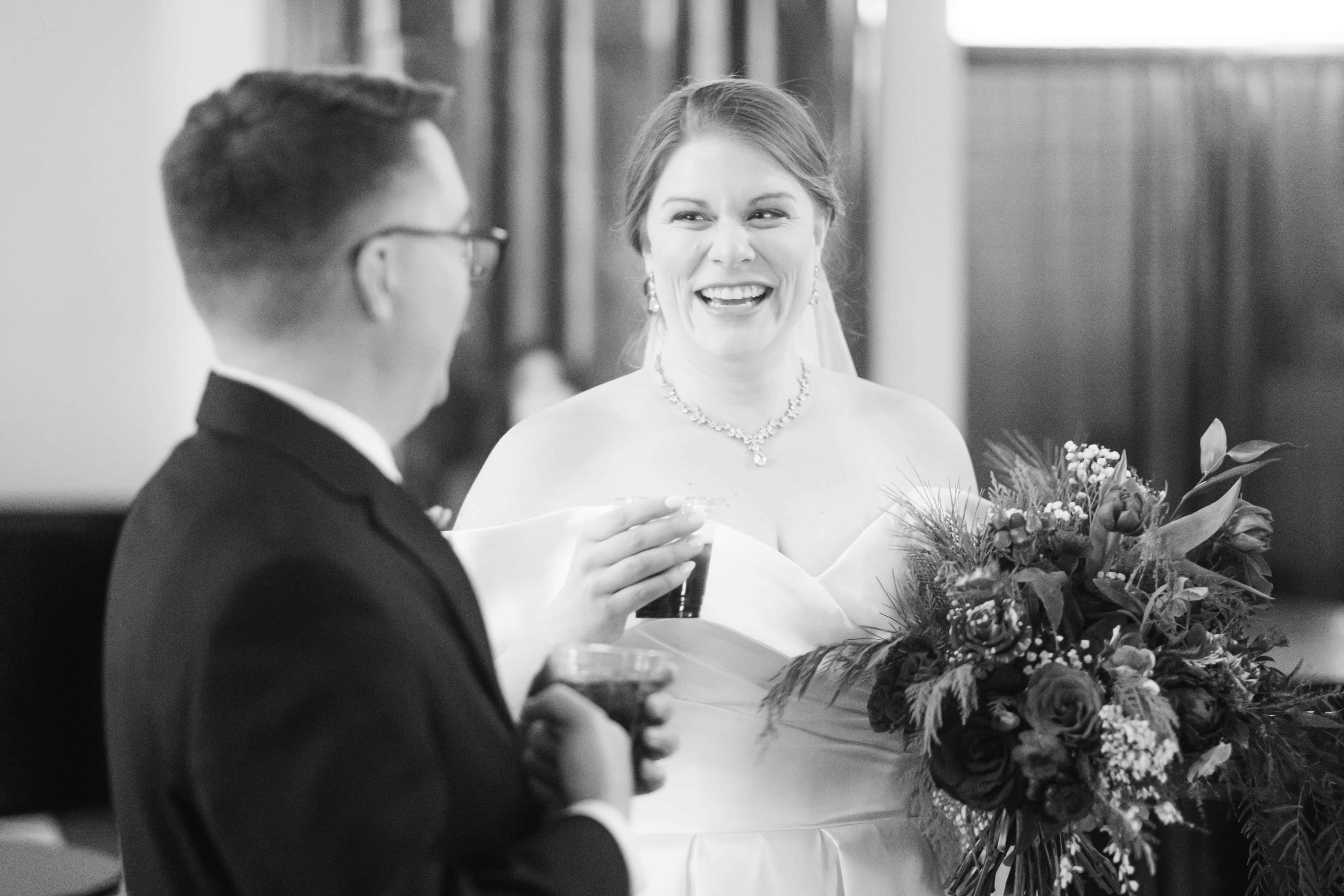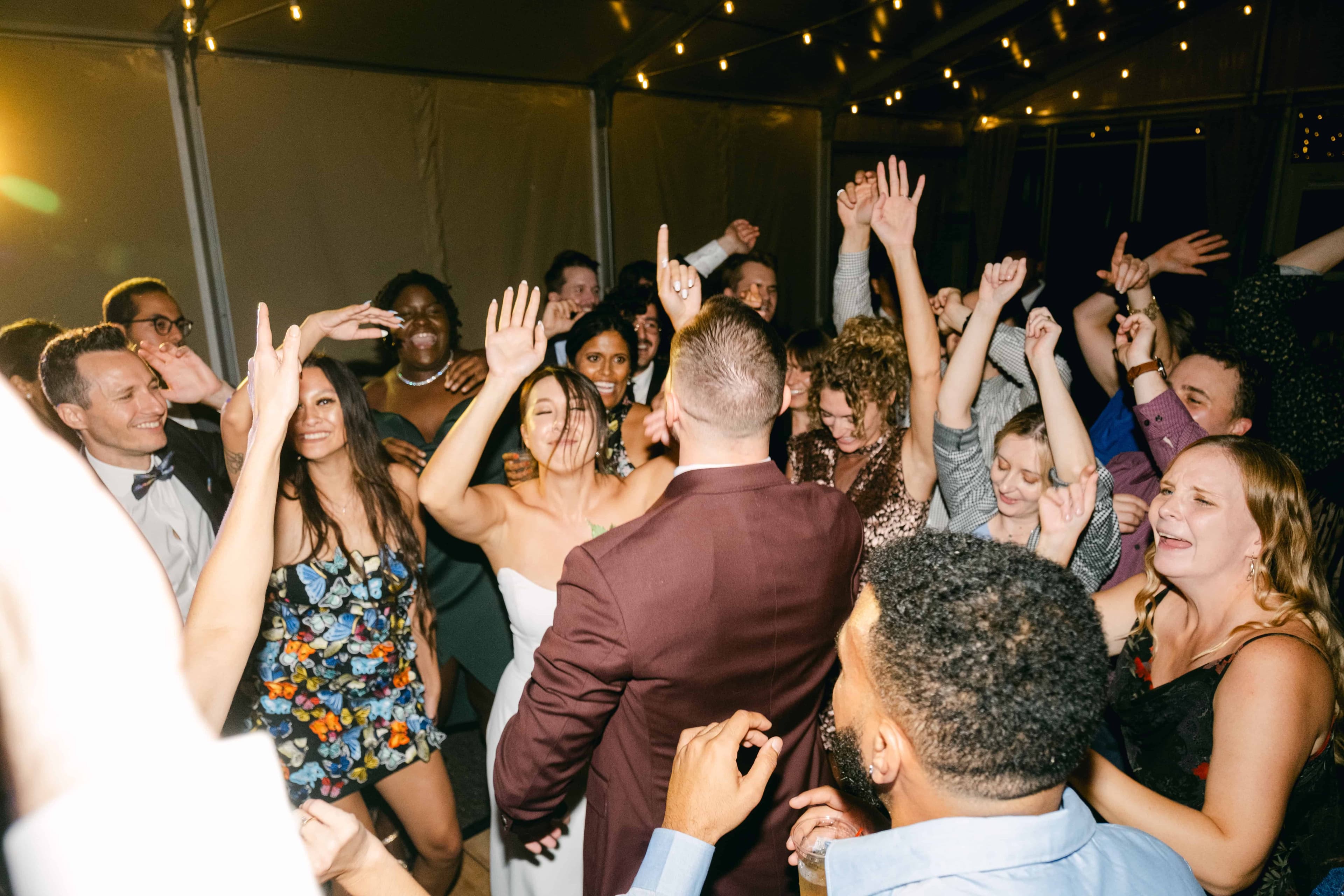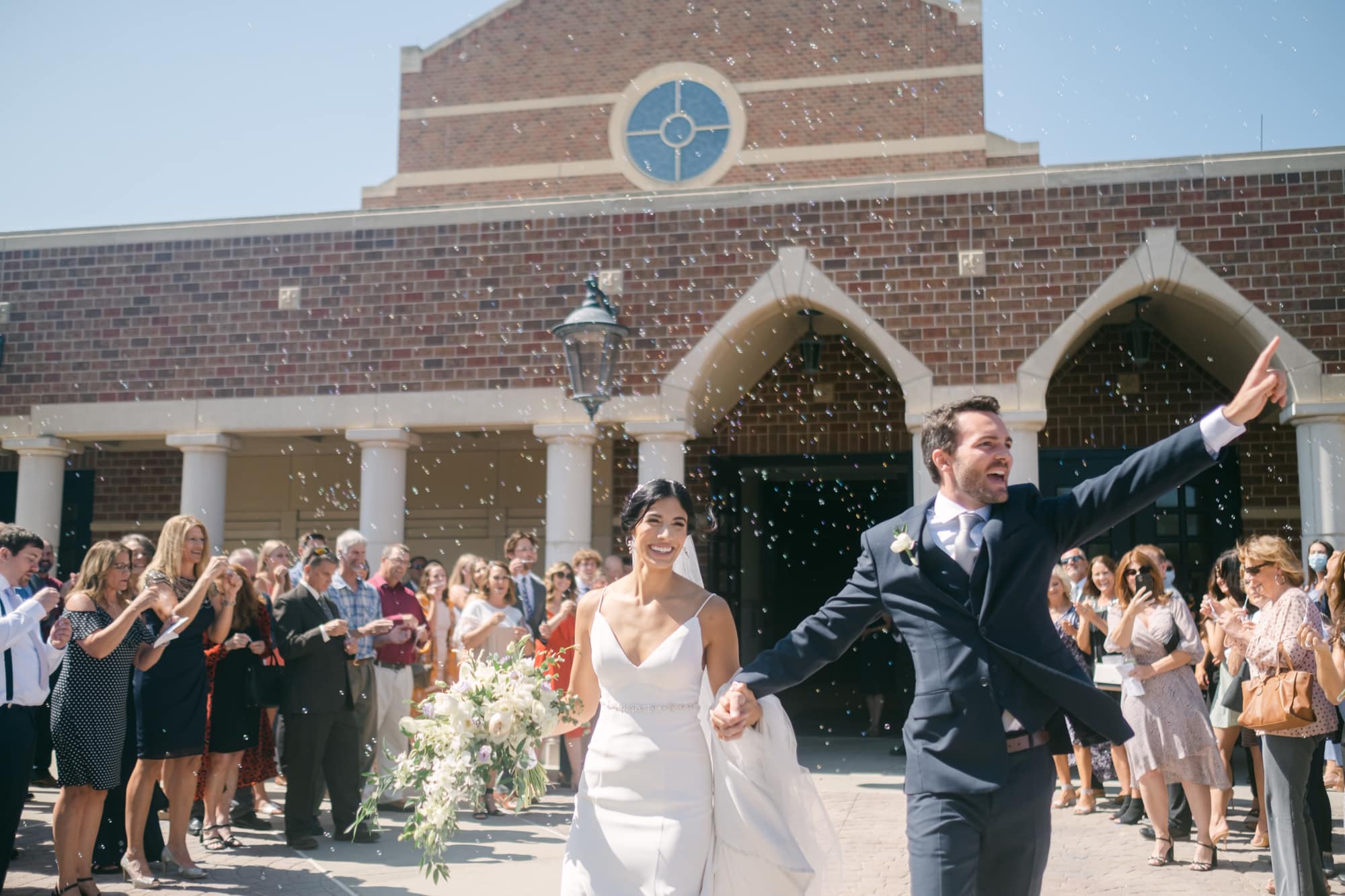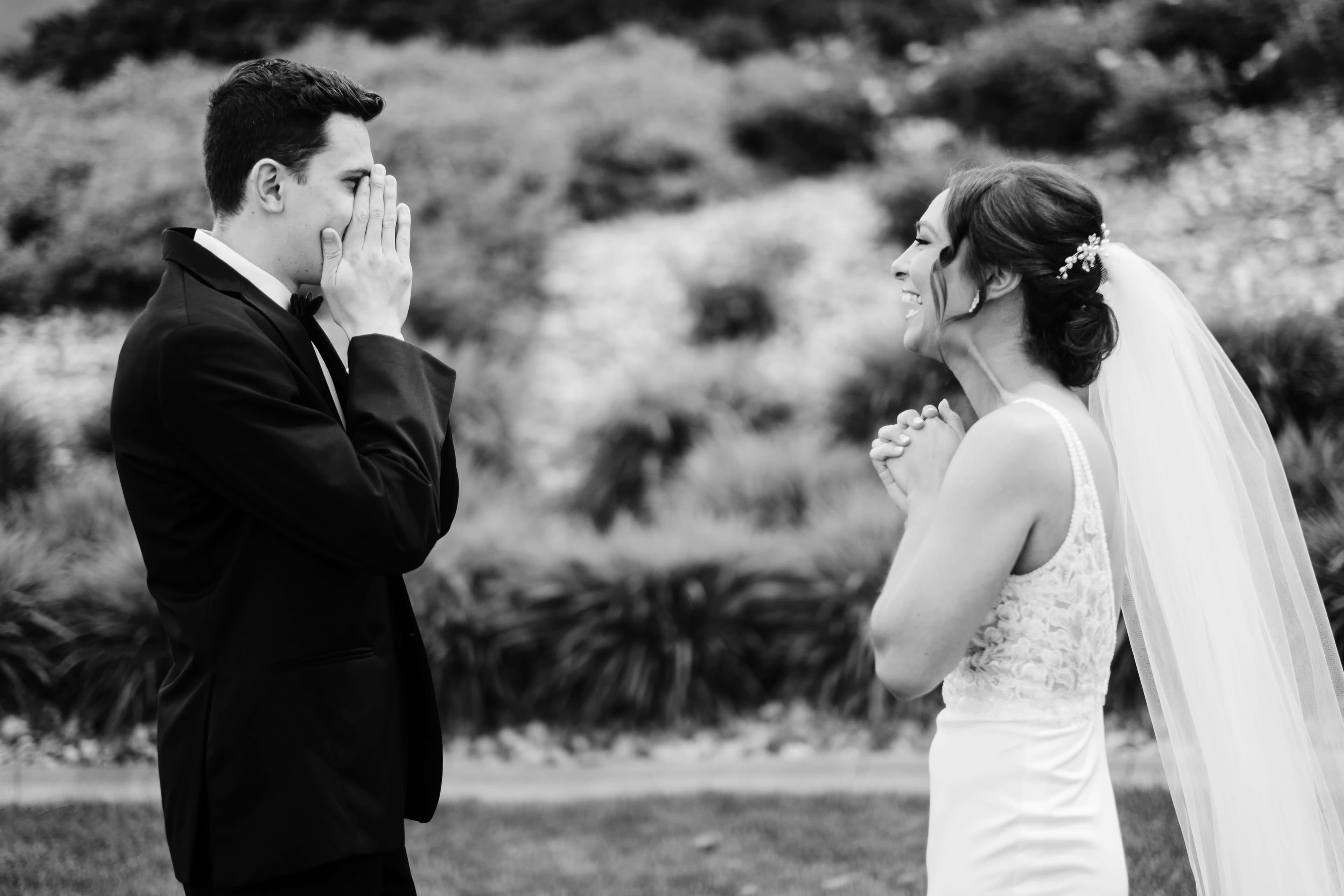
Every photographer has had this conversation. Your couple is torn on the first look, they ask what you think, but what they are really asking is what it does to their day.
A first look moves about 90 minutes of photography from one side of the ceremony to the other, and everything downstream moves with it. When your coverage starts. What cocktail hour looks like. How much of their own party the couple actually attends. Where the portrait light comes from.
After ten years and a couple hundred weddings, I do not have a side in this. I have built great days both ways, and it is not my decision to make. What I do have is the structure: both days side by side so you can plan for either one.
If you want the full method for building a day backwards from the ceremony, check out the complete timeline guide.
What does a first look actually change?
A first look is a private moment before the ceremony where the couple sees each other for the first time, usually with just the photographer there. It moves roughly 90 minutes of photography from after the ceremony to before it. With a first look, couple portraits, wedding party photos, and most family formals can all be finished before the ceremony starts. Without one, every photo that includes both partners has to happen after the ceremony, which usually compresses them into the 60-minute cocktail hour. A first look does not necessarily add time to the wedding day so much as relocate it. Coverage starts earlier, the window after the ceremony opens up, and the couple attends more of their own cocktail hour. The right choice depends on ceremony time, where sunset lands, and how the couple feels about the aisle moment.
What does the timeline look like without a first look?
Without a first look, the ceremony is the first place the couple sees each other, so every photo that includes both of them has to happen after it. On a typical day that means the wedding party photos and the combined family formals all happen after the ceremony. Budget about 20 minutes for the receiving line and the big group photos still need 40 to 60 minutes, which consumes the entire 60-minute cocktail hour. The couple spends that hour doing formals, not attending their party, and couple portraits get deferred entirely, either to a short sneak-away during the reception or a sunset session. The structure works, and it is the right call for plenty of couples, but you and your couple have to plan where guests go after the ceremony, have a formals location picked, and have a portrait window reserved later in the day.
Here is that day in full. A 4:00 PM ceremony, eight hours of coverage booked, a short secular ceremony, getting ready about 20 minutes from a single venue that hosts both ceremony and reception, and a late-September date near Omaha, so sunset lands around 7:15 PM. (The durations behind all of this live in the wedding day timing reference.)
Before the ceremony. When the ceremony time allows it, I build in what I call separated formals: just the bride's family, just the groom's family, each partner with their own side of the wedding party, individual portraits. Everything that does not require the couple in the same frame. This clears 30 to 45 minutes of the photo list before the ceremony. What is left afterward is only the big combined groups.
- Ceremony: 4:00 PM
- 3:30 - 4:00 PM, buffer, all photos wrapped
- 2:45 - 3:30 PM, separated formals
- 2:15 - 2:45 PM, travel from getting ready to the venue (20-minute drive plus a 10-minute pad)
- 12:15 - 2:15 PM, getting ready
- Coverage start: 12:15 PM
After the ceremony. Every photo with both partners in it has to fit between the ceremony and the reception:
- 4:00 - 4:30 PM, ceremony
- 4:30 - 4:50 PM, receiving line, while guests filter toward cocktail hour
- 4:50 - 5:20 PM, combined group formals: wedding party, then both families together
- 5:30 - 5:35 PM, grand entrance
- 5:35 - 6:40 PM, dinner
- 6:40 - 7:00 PM, couple portraits at sunset, the first real portrait time the couple has had all day
- 7:00 - 7:30 PM, toasts, first dance, parent dances
- 7:30 PM, cake cut, then open dancing
- Coverage ends: 8:15 PM
The order of the groups matters. If separated formals happened before the ceremony, these groups will happen quick so I'll typically do wedding party then family, but it really could go either way. But if nothing was photographed beforehand, family goes first, every time. Family members constantly fail to realize they are expected in photos, and if you make them wait through the wedding party set, one or two of them will drift off to the reception, and now you are hunting people down at dinner for make-up shots. A named list the couple has already reviewed is what lets them warn their families ahead of time; the list design, and which shots can happen before the ceremony, are in the family formals shot list guide.
The couple needs somewhere to be. While guests clear the ceremony space, the couple is either doing a receiving line or hidden away. Both work, as long as it is planned. Talk to the venue or officiant in advance so someone directs guests when the ceremony ends, because plenty of guests will linger in their seats expecting a big exit that might not be happening. You want to avoid a situation where the couple gets swarmed with congratulations, and every minute of it comes out of the formals window.
Couple portraits give first. Family and wedding party photos have to happen in that window, so portraits of just the two of them will often times get deferred to later: a few frames if the formals spot is good, then a sneak-away during the reception or a sunset session. Through peak season that works fine, because golden hour usually lands during dinner and there is a natural gap to slip out. In late fall and winter it stops working, because sunset comes before or during the ceremony itself, and that is exactly why I push hardest for a first look on those dates. More on that below.
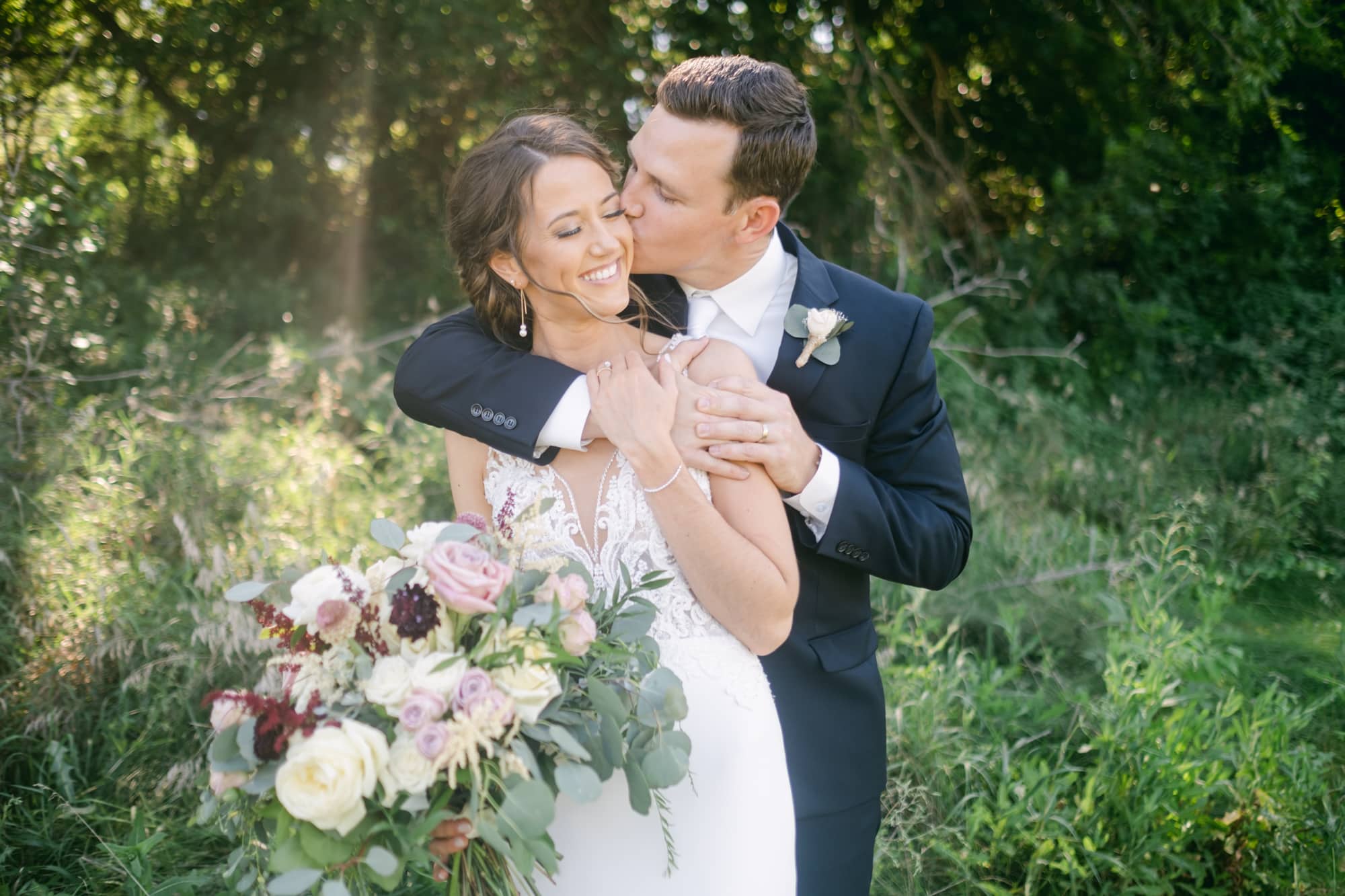
When there is no window at all, plan the escape route. Early in my career I shot a 1:00 PM catholic ceremony, no first look, at a church that ran a second wedding at 3:00. The ceremony ran long and the next couple's guests started arriving before ours had finished. We got a couple of groupings inside, then scrambled outside with no location picked. A no-first-look day with an early or long ceremony needs a backup photo location chosen ahead of time.
What does the timeline look like with a first look?
Budget about 30 minutes for the first look itself, then run couple portraits, wedding party photos, and family formals before the ceremony, all wrapped at least 30 minutes before it starts. That pulls the coverage start earlier by 45 to 90 minutes, depending on how many photos would have happened before the ceremony anyway. In exchange, the window after the ceremony opens up: the couple attends their own cocktail hour, the reception starts on time, and the only photos left are a sunset session and any groupings that could not be there early. The first-look block also doubles as buffer, because the reveal itself takes only a few minutes, so a late morning usually recovers inside it. The trade comes at the end of the night: coverage that starts earlier also ends earlier, usually at the cost of the dance floor.
The first-look version of this exact day is the full worked example in the complete timeline guide, so here is just the shape of it:
- Ceremony: 4:00 PM
- 3:30 - 4:00 PM, buffer, all photos wrapped
- 3:00 - 3:30 PM, family formals
- 2:30 - 3:00 PM, wedding party formals
- 2:00 - 2:30 PM, first look and couple portraits
- 1:30 - 2:00 PM, travel
- 11:30 AM - 1:30 PM, getting ready
- Coverage start: 11:30 AM, then after the ceremony: a cocktail hour, the reception, a 20-minute sunset session slipped out of dinner, and coverage ending at 7:30 PM as the parent dances wrap.
My intention on a first-look day is to do absolutely everything before the ceremony. In a perfect world, not a single formal photo happens after it. Sometimes someone on the family list cannot be there early, so we make up a grouping or two during cocktail hour, but it is a negligible amount of time. The couple walks out of their ceremony right into their own party.
Another advantage of a first look is added buffer time. I budget 30 minutes for the first look, but the reveal itself takes only a few minutes plus the portrait session after it. That overestimate is deliberate. When hair and makeup runs 45 minutes over, the first look is usually where the day gets made back. In an extreme delay we still do the first look, we just move faster through the formals behind it. The one thing that never moves is the photo cutoff 30 minutes before the ceremony.
Side by side, same eight booked hours:
| First look | No first look | |
|---|---|---|
| Coverage window | 11:30 AM - 7:30 PM | 12:15 PM - 8:15 PM |
| Couple portraits | Before the ceremony, plus sunset | Deferred to a sneak-away or sunset |
| Wedding party photos | Before the ceremony | During cocktail hour |
| Family formals | Before the ceremony | Split: separated groups before, combined groups during cocktail hour |
| The couple during cocktail hour | Attending it | Doing formals |
| End of coverage | Parent dances | Cake cut plus ~40 min of open dancing |
Notice the two starts differ by 45 minutes here, not 90, because the separated formals handed 45 minutes of photography back to that particular morning. On a day where nothing can be photographed before the ceremony, which is common with early church ceremonies, the full 90-minute swing shows up.
What pushes a couple toward each choice?
The strongest factor is daylight. For a late fall or winter wedding, sunset can land before or during the ceremony itself, which means no portrait light afterward, and a first look becomes close to mandatory if the couple wants outdoor portraits at all. Ceremony time pushes the other way: with an 11:00 AM or 1:00 PM ceremony, a first look forces a very early morning, since the couple has to be fully ready an hour or more sooner. Tradition is a real factor too. Some couples want the aisle to be the first time they see each other. On the other side, some people get so nervous walking down the aisle that they barely register the moment, and a first look takes that edge off while leaving the ceremony walk intact. These factors stack differently for every couple.
The winter version surprises couples every year: a 4:00 PM December ceremony can have sunset at 4:30, which means the day's entire portrait opportunity exists before the ceremony or not at all. Where golden hour lands on a given date quietly restructures the whole day, and the golden hour planning guide covers how to plan around it.
The argument for a first look that actually lands with couples is that the 90 minutes of photography it moves forward is time they spend together on their wedding day, instead of apart and waiting. And the guest experience is real too: nobody has to wrangle grandma back out of cocktail hour for a photo, because she was photographed before the ceremony.
My couples have gone both ways after hearing all of it, and both kinds of days have been great. The job is putting the factors on the table.
What do you actually say to a couple deciding?
The photographer's job is to help their couple decide with real information, and the conversation only helps when it is specific to their date. Pull the actual sunset time, look at their ceremony time, and describe what each choice does to their day in plain terms. Two consequences matter most. First, without a first look, the wedding party photos and family formals fill the cocktail hour, so the couple attends little or none of their own party during it. Second, the roughly 90 minutes of photography that a first look moves before the ceremony is time the couple spends together on their wedding day, which is often the argument that lands hardest. Say both consequences out loud, tell them there is no wrong answer, and then build the timeline around whichever one they pick.
Here is what that sounds like in practice. For a winter date, the light does the arguing, and I say so plainly:
"One of the considerations we have to make for your day is sunset. Since you're getting married in December, sunset is at 4:30 PM, which is actually before your ceremony. We won't be able to do any portrait photos afterwards. I would strongly push for a first look so we can take advantage of the light we have that day."
That is as direct as I ever get, and only because the daylight leaves no room. For most dates it centers their experience instead of my schedule:
"My couples have always loved doing first looks because it means we can do all of your photos before the ceremony and then just go and party afterwards. We're not trying to wrangle your family after the ceremony ends when they're all trying to get to cocktail hour. It's a better experience for your people too."
And when a couple hears all of that and still wants the aisle to be the first time they see each other: great, then we build the day for it. That is what the separated formals are for. The no-first-look structure is not a punishment for choosing tradition.
What happens when a couple changes their mind late?
When a couple changes the first-look decision late, it is almost always adding one they previously turned down. The total booked hours usually survive the change. A first-look block has to be inserted where there was not one, the wedding party and family formals move from cocktail hour to before the ceremony, and the couple now has to be fully ready 60 to 90 minutes earlier than they were planning. The hard part is verifying everything the move touches: the getting-ready end time, the travel between locations, and the pre-ceremony cutoff. The classic miss is forgetting to pull getting-ready earlier, so hair and makeup now overlaps the new first look on paper and nobody notices until the week of the wedding. Rebuild the morning, then re-check the first half of the day against the ceremony.
In my experience this almost never runs the other way. Couples add first looks late; they rarely drop them. Often it happens right after the timeline conversation, when they see the no-first-look version of their day on paper and decide the cocktail hour matters more to them than the reveal.
The rebuild itself is very doable, and if separated formals were already planned it is honestly easy, because the formals just consolidate and move ahead of the ceremony and the cutoff before the ceremony still holds. When I did this in a document, moving the pieces took minutes, and then I spent the rest of the evening re-checking every time on the page against every other time, because one late getting-ready end time quietly breaks the morning. Handling timeline revisions is worth a post of its own, and it has one: how to handle wedding day timeline revisions builds this exact change against the version it replaced, hour by hour.
I will keep the product note short, because the lesson above is the point: in Daymarked, first look is a setting on the wedding, and changing it restructures the day. The pre-ceremony stack and the cocktail-hour load move together, so the rebuild you just read about happens in one move, and your job becomes reviewing the result instead of reconstructing it.
And the reassurance to pass along to the couple: every couple of mine who added a first look, even close to the day, has been glad they did.
Settle the first look first
If there is one habit to take from this post, it is order of operations: settle the first look before you build anything else. It is the largest structural decision on the day, and everything downstream stacks differently depending on the answer. Resolve it early, then build backwards from the ceremony the way the complete timeline guide lays out.
And at the end of the day, this is your couple's decision. You are the one who knows the light and what each answer does to the structure of the day. A couple that decides with real information ends up happy either way. The days that go wrong are never the ones where the couple chose. They are the ones where nobody did.